Few shows have captured the essence of a bygone era like Netflix’s Stranger Things. Set in the fictional town of Hawkins, Indiana, the series immerses audiences in mid-1980s pop culture, blending supernatural suspense with nostalgia so vivid you can almost hear the crackle of a Walkman. Integral to this is the revival of authentic 1980s brands, which appear throughout the series not as advertisements but as anchors to the era.
Take Coca-Cola, for instance. Its controversial “New Coke” from 1985, once deemed a marketing disaster, found fresh life through Stranger Things, accruing over 33 billion media impressions and an estimated $1.5 million in product placement value according to Concave. The resurgence demonstrates how a fictional narrative can resurrect a brand, tapping into viewers’ collective memory while weaving seamlessly into the storyline.
Eggo waffles became another emblematic example, beloved for their association with Eleven’s telekinetic adventures. Schwinn and Mongoose bicycles, Baskin-Robbins-inspired “Scoops Ahoy” experiences, and even Nike sneakers all contribute to a tapestry of authenticity. As Stacy Jones, CEO of Hollywood Branded, notes, “The numbers are just so truly over the top, and you even have chatter about brands that didn’t actually appear in the content.” In other words, the show’s cultural pull alone sparks renewed interest, demonstrating the magnetic power of nostalgia-fueled marketing.
Stranger Things operates in a unique space where storytelling and marketing converge. With Netflix’s subscription model, the series doesn’t rely on traditional advertising revenue, meaning brands are woven into the narrative for authenticity rather than paid promotion. This organic approach enhances immersion while providing measurable business benefits.
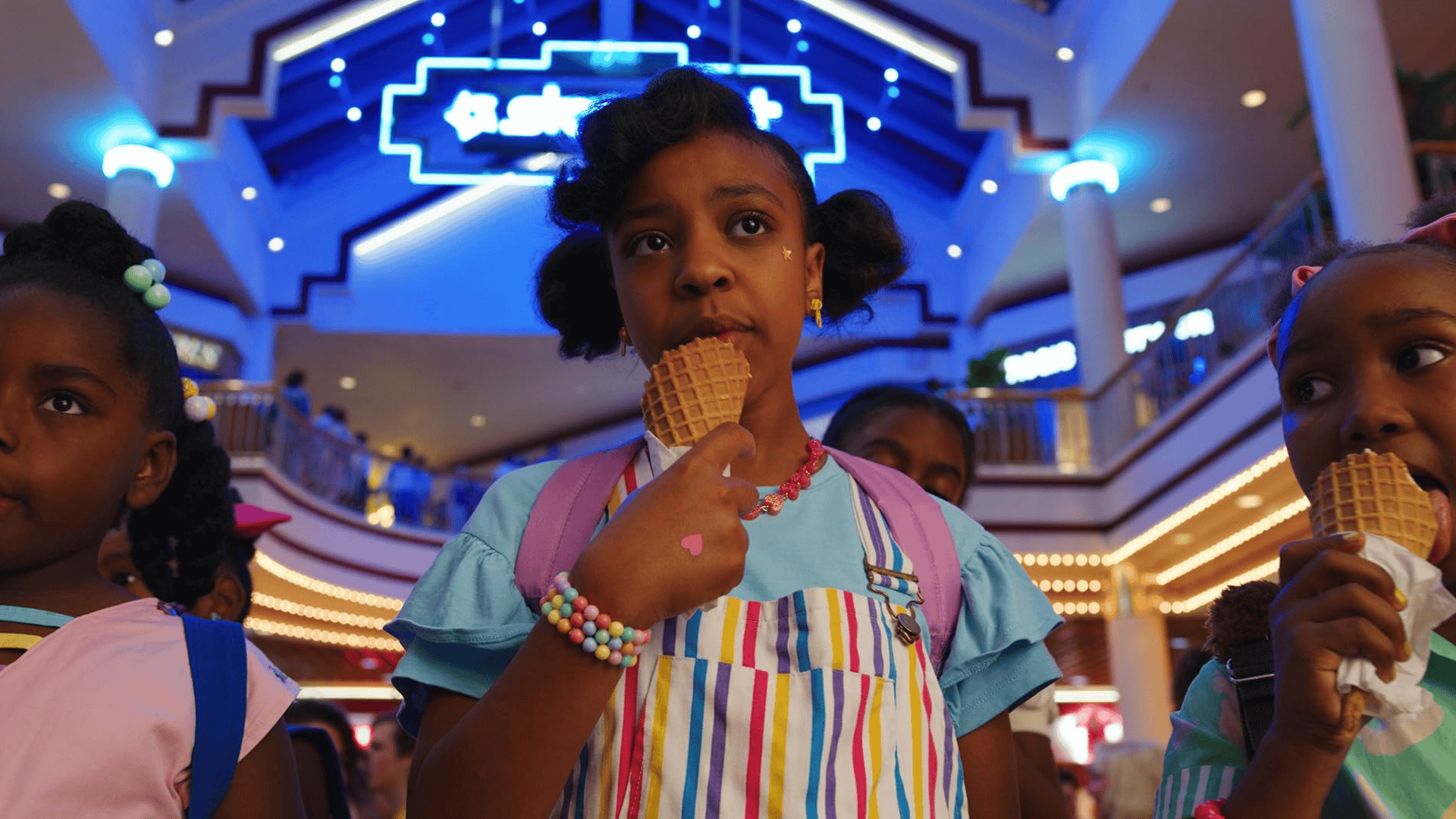
Baskin-Robbins’ collaboration exemplifies this strategy. By creating a “Scoops Ahoy” ice cream shop in Burbank, complete with themed flavours, the brand experienced a 150% sales increase in two weeks. The company reported that the initiative generated an astounding $208 million in media value, showcasing how well-executed fan experiences can translate into significant commercial success. Such campaigns go beyond product placement; they create interactive, memorable experiences that cement a brand’s place in pop culture while allowing fans to step physically into the world of Hawkins.
Netflix’s approach also amplifies the contextual significance of these products. Caressa Douglas, SVP at Branded Entertainment Network, explains, “Without those brands, we wouldn’t know the time period.” The meticulous integration of era-specific items allows viewers to relive 1980s culture organically, enhancing both narrative authenticity and fan engagement. Schwinn bicycles selling out shortly after appearances and Coca-Cola reviving its New Coke line demonstrate that when nostalgia meets storytelling, the results are tangible, economically and culturally.
Stranger Things exemplifies the evolution of brand integration, where products serve dual purposes: enriching storytelling and driving consumer engagement. By avoiding overt advertising and placing products authentically within Hawkins’ narrative, the Duffer Brothers have created an immersive 1980s experience that resonates across generations.
The series has become a blueprint for how brands can benefit from cultural alignment. Nostalgia drives engagement, curiosity, and even consumer behaviour, bridging decades of cultural memory. As Stranger Things 5 nears its November 2025 premiere, fans and marketers alike are watching closely, anticipating how new brand integrations will continue to shape both the fictional world of Hawkins and real-world marketing strategies. The series proves that even in a world dominated by streaming, storytelling can revive past icons, turning forgotten brands into cultural touchstones once again.
With Coca-Cola, Eggo, Schwinn, and Mongoose now thriving anew in pop culture, it is evident that the allure of nostalgia is not fleeting. For fans, these details enhance immersion and engagement, allowing them to experience Hawkins not only through the lens of suspense and adventure but also via the tangible products that made the 1980s so culturally resonant. Nostalgia is now a currency, storytelling is the vehicle, and Stranger Things has become its most thrilling marketplace.